A Project of


 Thinking Pakistan's History
Earliest life in the subcontinent dates back 300,000 to 500,000 years ago
Last Updated: 2 Aug. 2014
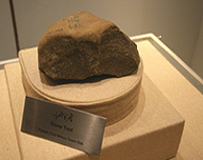
In the Soan River Valley between the two Ice Ages, some 500,000 to 300,000 years ago, primitive humans lived. Some of the earliest relics of Stone Age humans were found in the Soan Valley near Rawalpindi. The inhabitants of this predominantly agricultural region learned to tame and husband animals and cultivate crops some 9,000 years ago.
Early Stone Age humans made stone pebble tools and hand axes and are most likely to have lived in temporary shelters made of sticks and leaves rather than caves. Middle Stone Age humans slowly learned to make better tools. They made flat pointed tools known as flakes which could be used as spearheads and knives.
As the Ice Age ended, only Homo sapiens (modern humans) survived while all other species perished. They were able to fight animals, find shelter in caves and stay warm with fire. Evidence of cave paintings can be found in Sanghao Valley Mardan in Khyber Pakhtunkhwa. Stone tools found here date back to 70,000 years ago.
Hussain, Jain. An Illustrated History of Pakistan (Book 1). Karachi: Oxford UP, 1981.
“South Asian Stone Age.” Wikipedia. Wikimedia Foundation, 15 Oct. 2013.
Ali, Mubarak. “Old Stone Age Sites in Pakistan.” Dawn. 27 Sept. 2007.

