A Project of


 Thinking Pakistan's History
A new culture emerged when people moved from the villages to the plains of Sindh and Punjab around 4000 BC.
Last Updated: 27 Jan. 2014
Around 4000 BC a new urban culture emerged when people started moving from their village communities down to the plains of Sindh and lower Punjab. These settlements became the forerunners to the Indus Valley Civilization. One such site located at Amri, south of Mohenjo-daro near the Kirthar Range in Sindh, flourished between 3600 to 3300 BC. Another site located at Kot Diji, near the Rohri Hills in Khairpur Sindh, flourished between 3200 to 2600 BC. They developed new agricultural techniques and with this a new form of society emerged with rulers and artisans. There is evidence of a widespread fire which destroyed these towns.
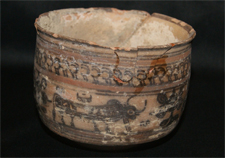
Around 3000 BC there is evidence of the emergence of the potter’s wheel which meant the development of pottery with greater efficiency. It is likely that people began to work as full-time potters. Each town developed its own distinctive style of pottery. Among the artifacts found at Kot Diji are toy carts, which provide evidence that wheeled carts pulled by bullocks were in use at the time as well.
Hussain, Jain. An Illustrated History of Pakistan (Book 1). Karachi: Oxford UP, 1981.

